
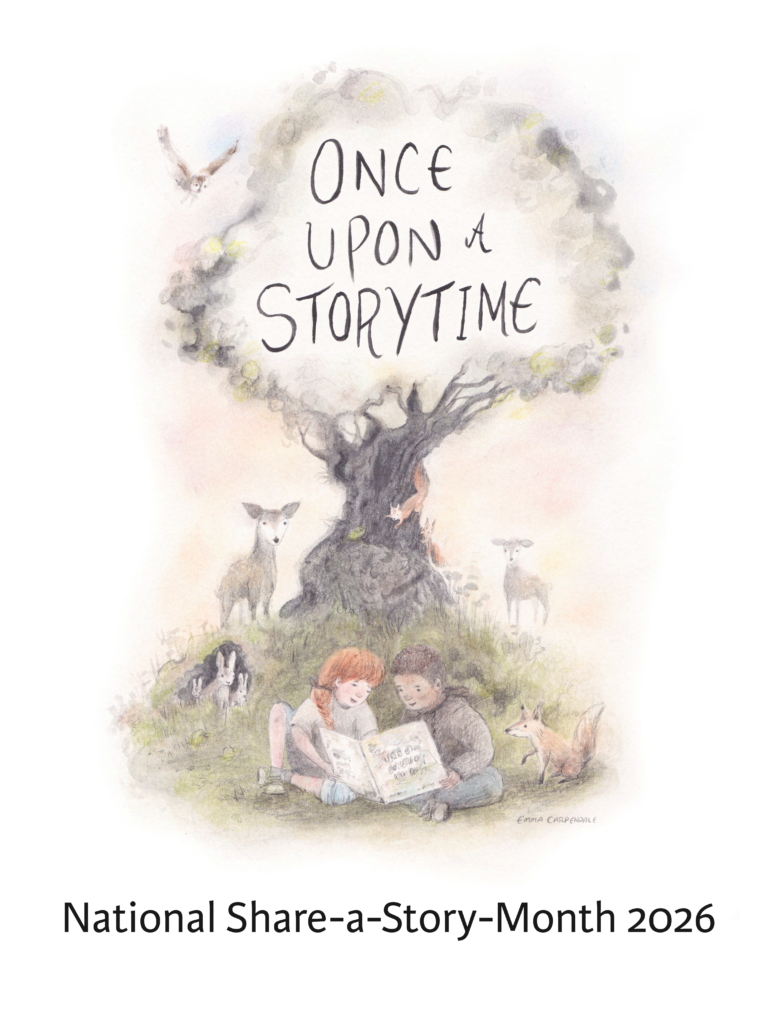
Reading Aloud by Anne Bradley
Go All In for the National Year of Reading and join in with our story sharing festivities in May. This year National Share-a-Story Month: Once Upon a Storytime will be celebrating the joy of reading aloud. To make sure everyone is ready, Anne Bradley, previous National Secretary of the Federation shares her precious advice on how to get the most fun from a read aloud.
Reading Aloud
Reading aloud and sharing books with children is one of the most enjoyable things to do! You are introducing children to the excitement and pleasures of stories that in turn will lead to them seeking out their own books to read.
Don’t underestimate the power of this. You are the experienced reader and are giving children the opportunity to engage in texts that may be beyond their current reading capacity or that they might never have picked up themselves. As humans we have basic connection to oral story-telling and reading aloud creates that sense of magic, anticipation and shared fun for children.
Before you read familiarise yourself with the text so that you are able to share itwith confidence and you don’t get any difficult surprises yourself!
Reading to young children:
When sharing a book with young children let them see the book as you read so that they can engage with the illustrations. Talk about the text as you read asking the children what they think, what might happen, do they like a character. There are so many wonderful elements in the illustrations accompanying the text for you and the child(ren) to discover together. Also, a child becomes familiar with a loved book and will return to it independently, recalling the narrative through the pictures that they can see. Children enjoy repeated readings of the same book, which can become frustrating for the reader but is a fantastic indication that this book is special to them and they begin to read along with you because it is so familiar.
Young children love rhythm and rhyme. The musicality of a book or poem encourages them to join in with repeated phrases and rhyming endings. You can ask them to predict what words they might hear and encourage them to join in with you as you read.
Reading to older children:
Reading to older children is so similar. Choose books with interesting and exciting stories so that you can build up suspense, ask questions and sometimes pause on a cliffhanger. These hooks demonstrate the power of reading to children. They want to know what happens next and may choose to read ahead themselves. If they don’t, you can be sure they are very much looking forward to their next instalment.
As you read vary your expression and pace. You don’t have to create different voices and accents but you can indicate a variety of characters through expression and tempo. You can highlight the drama of a situation by adjusting the speed and volume of your reading. Facial expressions and hand gestures can also help. You can indicate anger through a raised voice and elicit empathy though a slower delivery.
Once again, engage the children with the text by asking questions, soliciting opinions and explaining more difficult concepts.
Poetry is written to be read aloud and children enjoy listening to raps, comic verse and poems that create thoughtful images. They will ask for repeated readings of favourites and some poetry can lead to important and meaningful discussions.
Also consider supporting your reading with props from time to time. For example, having a bag of items linking to your story or having a box with a few pieces of ‘treasure’ that might link to the characters you are reading about.
Reading with children can create safe spaces where children can listen, laugh, empathise and imagine. We can read with them to help them find a love of books and set them on the path to become lifelong readers
Anne Bradley
For further ideas about reading with children, Anne highly recommends The Reading Environment by Aidan Chambers.
Some of Anne’s favourite texts to read aloud
Dinosaurs
Dinosaur Roar- Henrietta and Paul Stickland
Stomp, Chomp, Big Roars, Here Come the Dinosaurs- K. Umansky
Harry and the Dinosaurs –Ian Whybrow
Stone Girl, Bone Girl – L. Anholt
Dinosaurs and all that Rubbish – M. Foreman
Bumpus Rumpus Dinosaurumpus- Tony Mitton
Tyrannosaurus Drip – Julia Donaldson
Rex – Simon James
Long Neck and Thunderfoot – H.Piers and M. Foreman
Moving On
The Train Ride- June Crebbin
Jack and the Flum Flum Tree- Julia Donaldson
Naughty Bus – J. Oak
Gumdrop stories- Val Biro
Oi Get Off Our Train – John Burningham
Bumper to Bumper – Jakki Wood
The Journey – N. Griffiths
Up, Up, Up – Susan Reed
Whatever Next – Jill Murphy
Water World
Splish Splash Splosh – M. Manning
The Snail and the Whale- Julia Donaldson
The Rainbow Fish- Marcus Pfister
Water is Water – Miranda Paul
One Giant Splash . M. Dahl
Sally and the Limpet – Simon James
The Islanders – Helen Dunmore
The Sand Horse – M. Foreman
The Little Boat – Kathy Henderson
The Pig in the Pond – Martin Waddell
Suggested Stories to use with Props
Jack and the Flum Flum Tree- Julia Donaldson
Katie Morag and the Tiresome Ted – Mairi Hedderwick
The Smartest Giant in Town- Julia Donaldson
The Lighthouse Keeper’s Lunch- Ronda and Davis Armitage
These are just a few. Any story can be enhanced with props, soft toys, puppets. They can be things you have around the house!
Poems
Just a few fun ones here. There are many great anthologies available to help you choose.
Gran Can You Rap- Jack Ousby
Daddy Fell into the Pond- Alfred Noyes
On the Ning Nang Nong- Spike Milligan
From a Railway Carriage- Robert Louis Stevenson
